
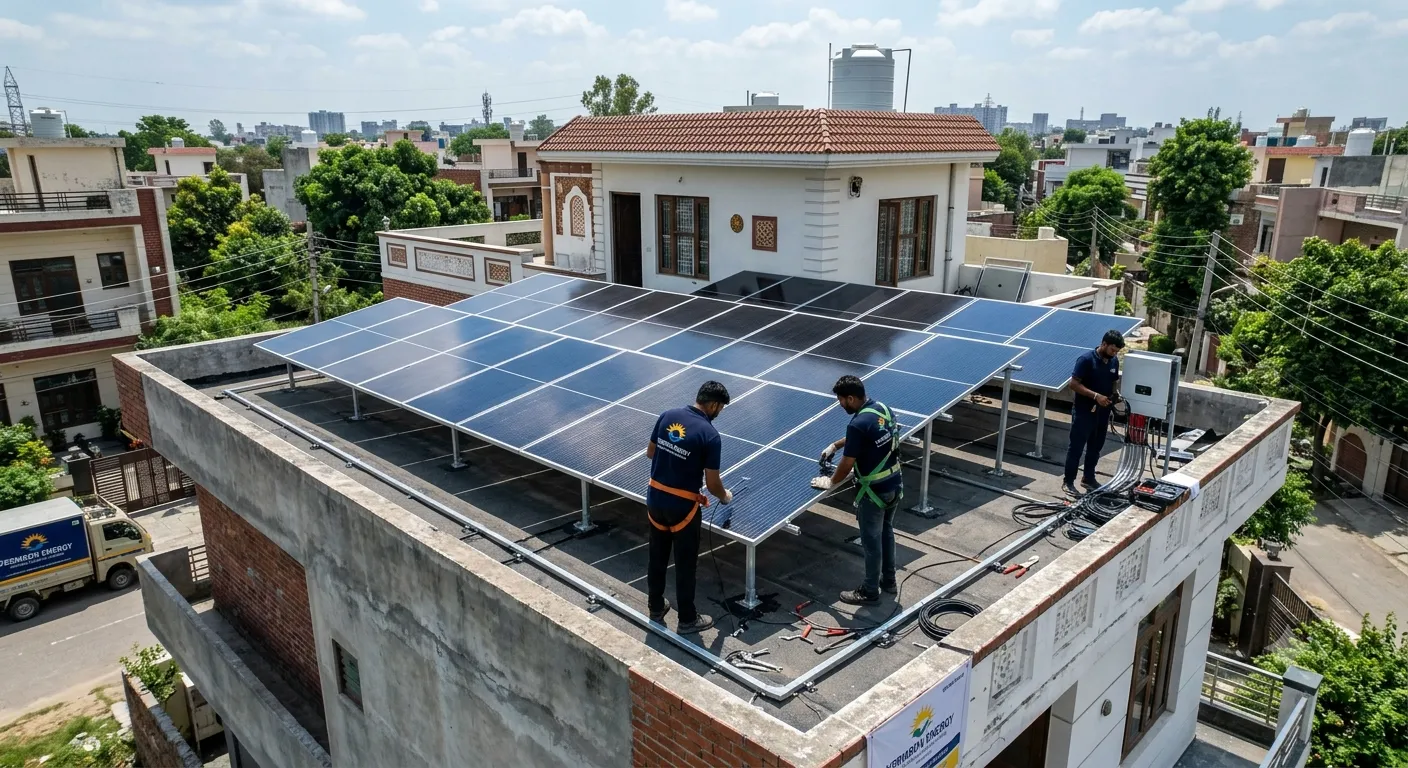
Switching to sustainable power is the smartest financial decision you can make for your home or business today. Known as the industrial engine of Punjab, this bustling city is rapidly modernizing its infrastructure. If you want to eliminate your skyrocketing power bills, finding the best solar energy in ludhianna is your definitive path to energy independence.
High solar irradiance combined with lucrative government initiatives makes the adoption of solar energy in ludhianna highly practical, profitable, and accessible for everyone. In this comprehensive guide, we provide an exhaustive breakdown of everything you need to know about setting up a high-yield solar power plant. From precise system sizing and navigating government subsidies to evaluating the top localized empanelled installers, this blueprint ensures maximum return on your green investment.
Why Transitioning to Solar Energy in Ludhianna is a Top Financial Move
The domestic and industrial power tariffs applied by the Punjab State Power Corporation Limited (PSPCL) continue to rise annually. For typical residential consumers and sprawling hosiery or cycle manufacturing hubs, this means operational overheads keep escalating. Transitioning to the best solar energy in ludhianna provides an absolute shelter from these fluctuating grid costs.
Geographically, Punjab receives an outstanding average of 4.8 peak sun hours per day. By capturing this abundant natural resource, a standard rooftop system generates free electricity for upwards of 25 years. This geographic advantage drastically accelerates your return on investment (ROI) while making a profound environmental impact by offsetting tons of carbon emissions annually.
The Substantial ROI Breakdown
Investing in solar is no longer just an environmental statement; it is a high-performing financial asset. On average, a residential solar energy system in the region pays for itself within 4 to 5 years. Given that tier-1 photovoltaic panels carry performance warranties extending up to 25 years, you effectively lock in two full decades of completely free electricity.
| System Capacity | Average Gross Cost | PM Surya Ghar Subsidy | Net Investment Cost | Estimated Monthly Savings |
| 1 kW | ₹60,000 | ₹30,000 | ₹30,000 | ₹624 |
| 2 kW | ₹1,20,000 | ₹60,000 | ₹60,000 | ₹1,248 |
| 3 kW | ₹1,80,000 | ₹78,000 | ₹1,02,000 | ₹1,872 |
| 5 kW | ₹3,00,000 | ₹78,000 | ₹2,22,000 | ₹3,120 |
| 10 kW | ₹6,00,000 | ₹78,000 | ₹5,22,000 | ₹6,240 |
Understanding the Solar Subsidy Framework in Punjab
To scale up local clean power adoption, the central government has deployed aggressive financial aid channels. Homeowners looking to integrate the best solar energy in ludhianna can easily apply for the PM Surya Ghar Muft Bijli Yojana. This program applies a Direct Benefit Transfer (DBT) structure that sends financial assistance directly into the applicant's verified bank account post-commissioning.
Subsidy Distribution Scales Explained
1 kW to 2 kW Systems: Eligible for ₹30,000 per kW, capping out at a maximum of ₹60,000 for a full 2 kW setup.
2 kW to 3 kW Systems: Receives an added baseline incentive of ₹18,000 for the third kilowatt, pushing the overall central subsidy cap to a maximum of ₹78,000.
Systems Above 3 kW: The central financial backing remains flat at ₹78,000. However, larger installations continue to optimize financial metrics via expanded net metering capacity.
⚠️ Critical Compliance Note: To successfully lock in your central subsidy funds, you must procure standard Made-in-India (DCR) solar modules. Furthermore, the installation process must be executed by an MNRE-empanelled vendor registered directly on the national PM Surya Ghar portal.
Step-by-Step Roadmap to Sizing Your Solar System
Choosing a configuration that does not match your real operational demands can reduce your long-term fiscal yield. Sizing a system for solar energy in ludhianna demands a deep dive into historical consumption data, structural load capability, and shading issues.
Step 1: Audit Your Average Monthly Power Bills
Pull your PSPCL electricity invoices from the past twelve months. Locate the total units consumed (kWh) across different seasons. Because summers demand intense usage due to multiple air conditioning units, looking at an annual average gives you a realistic benchmark for your baseline requirements.
Step 2: Calculate Target Generation Profiles
A properly optimized 1 kW solar array generates roughly 4 units of electricity each day. If your property consumes close to 12 units per day (approximately 360 units monthly), a 3 kW setup will balance your consumption out to nearly zero. This specific tier serves as the most popular framework for regional 2-BHK and 3-BHK independent homes.
Step 3: Measure Available Shadows and Space Structures
Every single kilowatt of solar infrastructure requires approximately 100 square feet of column-free, unshaded roof space. Ensure that your concrete slabs or industrial tin sheds feature robust structural integrity and point directly toward the south to capture maximum solar radiation throughout the day.
How Net Metering Works with PSPCL
The true foundation of residential on-grid solar adoption is net metering. This system uses a specialized, bidirectional meter installed by PSPCL. This tracking device records both the energy you pull from the traditional power grid and the excess green electricity your rooftop panels push back out into it.
During peak afternoon hours, your solar setup often produces far more power than your home or factory actually uses. This surplus energy is automatically exported to the utility grid.
At the end of your billing cycle, PSPCL subtracts your exported units from your imported units. If you have exported more units than you consumed, those surplus credits carry forward to subsequent billing cycles within the active financial year, ensuring your winter bills stay remarkably low.
Top Rated Solar Power System Types
When selecting the best solar energy in ludhianna, you must decide between three primary system designs. Each architecture fits distinct use cases, grid reliability profiles, and financial goals.
1. On-Grid Solar Systems (Grid-Tied)
This configuration connects directly to your standard utility grid without any battery storage backup. On-grid options stand out as the most budget-friendly systems and are fully compatible with government subsidy programs. They are perfect for urban areas that experience highly reliable, continuous grid power.
2. Off-Grid Solar Systems (Standalone)
Operating completely independent of public utility networks, off-grid systems rely on heavy-duty solar battery banks to store daytime energy for evening use. This architecture is perfect for remote farmlands or rural outposts where traditional power lines do not reach, though they are not eligible for standard consumer subsidies.
3. Hybrid Solar Systems
Combining the absolute reliability of battery backups with the financial optimization of net metering, hybrid systems represent the premier tier of solar infrastructure. They keep your essential appliances running smoothly during localized power grid failures while still letting you export surplus power for bill credits when the grid is functional.
Step-by-Step Installation Process for Solar Energy
Deploying a solar energy system involves systematic planning and precise structural execution. The following framework outlines how an installation moves from inception to grid activation:
Key Metrics for Selecting an Elite Solar Installer
To guarantee that your hardware consistently delivers peak power for decades, you need to work with a highly competent, verified engineering firm. Use the following criteria when vetting a potential provider:
Official MNRE Empanellment Status: Never work with unverified, third-party contractors. Only officially empanelled vendors have the authorization to process government subsidy claims.
Proven Local Execution History: Look for companies that have successfully deployed substantial megawatt-scale portfolios across residential neighborhoods, commercial malls, and local industrial zones.
Comprehensive Post-Installation Maintenance Agreements: Solar panels need systematic cleaning and inverter checkups to maintain top performance. Partner with companies that include comprehensive multi-year service warranties.
Maximize Your Investment: Long-Term Performance Practices
While premium solar installations require minimal daily maintenance, keeping them completely free of industrial dust and pollution ensures they operate at peak efficiency. Ludhiana's active industrial environment can create a thin layer of dust on your panels over time, which can noticeably reduce light absorption if ignored.
We highly recommend rinsing your solar arrays with clean water once every two weeks, preferably early in the morning when the modules are cool to prevent thermal shock. Additionally, schedule annual electrical checkups with your technical partner to verify that all surge protection devices, earthing lines, and inverter connections remain completely secure against the elements.
The Green Future Awaiting You
Transitioning to solar power is a proven way to eliminate unpredictable monthly utility expenses while protecting our shared environment. By pairing the region's strong natural sunlight with advanced solar technology, you can take complete control of your energy future. Take the time to evaluate your roof space, choose an authorized installation partner, and claim your government subsidy to experience the unmatched financial freedom of clean energy today.


